
'When markets go into a budget with excessive optimism, the risk of disappointment is higher.'

Bank lending to companies is expected to go up in the coming quarters because the difference in interest rates between corporate bonds and bank loans has narrowed. In addition, recent policy reforms by the Reserve Bank of India (RBI), including allowing domestic banks to do acquisition financing, are expected to give further support to corporate lending, analysts said.

Cleaner balance sheets, regulatory support and strong growth prospects helped Indian private banks attract over $6 billion in foreign capital, with more deals expected in 2026.

Shares of tyre manufacturers have outperformed broader equity benchmarks, buoyed by multiple tailwinds. Softer raw material prices, an uptick in demand from automakers following the reduction of the goods and services tax (GST) rates, and steady replacement demand have lifted sentiment toward the sector.

'I don't see how a company like OpenAI can honestly expect to generate revenue significant enough to maintain its spending habits via John and Jane Q. Public,' points out Sree Sreenivasan.

The Comptroller and Auditor General of India (CAG) has launched an integrated audit across 32 states and Union Territories to assess the ease of doing business for the micro, small and medium enterprise (MSME) sector.

Indian automakers are reviving legacy nameplates to leverage brand recall and stand out in a crowded market, as classic badges like Sierra, Safari, Baleno and Scorpio return to attract buyers.

'Only four or five original companies remain; the rest have been replaced every decade as sectors evolve or leadership shifts.' 'Companies that fail to adapt -- like many textile mills from the 1970s and shipping firms from the 1980s -- disappear.' 'Benchmark indices reward those who reinvent themselves in line with economic demands.'

The reduction in the goods and services tax (GST) rates has increased the momentum in India's economic activity both on the supply and demand sides, while robust agricultural activity - reflected in the strong onset of rabi sowing and adequate reservoir levels - has reinforced the outlook for food supply and rural incomes, the finance ministry said on Thursday.

Domestic PMI data, US Federal Reserve meeting minutes and the progress on India-US trade deal negotiations are likely to influence movement in the equity market in the week ahead, according to analysts. Moreover, the trading activity of foreign investors would also influence the equity market trends.

Stock market sentiment is likely to remain optimistic going ahead, though some consolidation cannot be ruled out after the recent sharp rally in the benchmarks, analysts said. According to experts, the Nifty and Sensex could indeed move towards new record highs before the end of the year, if global cues stay supportive, crude oil prices remain benign and there is continued domestic earnings momentum.

India's top cement producers delivered a solid July-September quarter (Q2) in 2025-26 (FY26), lifted by firmer prices, higher sales volumes, and a favourable base. Seasonal weakness and maintenance outages did dent sequential performance, but the overall picture remained positive - and the road ahead looks steady.

'...aggressive pricing amid volatility, but these are exceptions.'

'Corporates now have multiple funding sources beyond banks, and many are sitting on large cash reserves.'

The Indian government has expressed its disagreement with the IMF staff's 'baseline' assumption that the 50 per cent US tariffs on its goods exports 'would remain in place indefinitely', based on which the staff pegged the country's GDP growth at 6.6 per cent this year, and pared its 2026-27 projection by 20 basis points to 6.2 per cent.

Despite a strong 7.8 per cent growth in the first quarter, the Indian economy is expected to grow at 6.5 per cent in the current financial year as the impact of US tariffs on Indian exports will reduce prospects, particularly in the second half, ADB said on Tuesday.

Axis Bank reported a sharp drop in net profit in the second quarter of financial year 2026 (Q2FY26) on higher provisions and weak operating profit growth while revenue growth was moderate. But loan growth and deposit growth improved to double-digits year-on-year (Y-o-Y) and asset quality also improved with the gross non-performing loan or NPL ratio moving down.

UPI crossed 20 billion monthly transactions for the first time in August 2025, with a transaction value of Rs 24.85 trillion.

'An asset must generate income. Equities yield dividends, bonds pay coupons, deposits give interest, and real estate earns rent.' 'Gold, silver, and even Bitcoin produce no income, they merely store value. So, they should not be compared to productive assets.'

Global rating Moody's on Monday affirmed India's long-term local and foreign-currency issuer ratings and the local-currency senior unsecured rating at 'Baa3' with a 'stable' outlook on the back of robust economic growth and sound external position. The rating agency also affirmed India's other short-term local-currency rating at P-3.

60 per cent of hospitals are directing investments towards IT capability building, 50 per cent towards business intelligence tools and data lakes, and a significant share into AI-led use cases such as clinical documentation (72 per cent), decision support systems (64 per cent) and imaging (60 per cent).

From the Sensex pack, Bajaj Finserv, Larsen & Toubro, Bajaj Finance, HDFC Bank, Bharat Electronics and Kotak Mahindra Bank were among the major laggards. However, Tata Steel, Asian Paints, UltraTech Cement, and Trent were the biggest gainers.

India's top listed real estate developers - DLF, Lodha Group, Prestige Estates, and Oberoi Realty, excluding Godrej Properties - reported strong presales growth in the first quarter (Q1) of 2025-26 (FY26), even as earnings showed a mixed trend. According to Nomura, the top five developers - DLF, Lodha, Prestige, Oberoi, and Godrej - recorded a cumulative 59 per cent year-on-year (Y-o-Y) growth in presales.

India's military expenditure in 2024 was nearly nine times that of Pakistan's, according to a study released by the Stockholm International Peace Research Institute (SIPRI). India's spending reached USD 86.1 billion, while Pakistan spent USD 10.2 billion. China's military spending continued to rise, reaching USD 314 billion, accounting for 50% of all spending in Asia and Oceania.

The domestic stock market will continue to monitor the Israel-Iran conflict and its impact on global supplies besides prices of crude oil this week, analysts said. Global trends and trading activity of foreign investors would also drive investors' sentiment during the week.
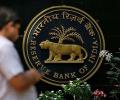
With inflation comfortably below the Reserve Bank of India's (RBI's) 4 per cent median target and likely to undershoot its 3.7 per cent projection for 2025-26 (FY26), there is room for the monetary policy easing cycle to be sustained, the Finance Ministry said on Monday. The comments, featured in the ministry's Monthly Economic Review for June 2025, assume significance ahead of the Monetary Policy Committee (MPC) meeting of the Reserve Bank of India (RBI) scheduled to begin from August 5.

The defence expenditure was 5,55,484 crore while the central government expenditure was 39,44,909 crore for the year 2022-23, according to the data shared by the government in the response.

More than half of all new project announcements in the June 2025 quarter came from the manufacturing sector. Manufacturing projects worth around Rs 2.3 trillion were announced in the three-month period, accounting for 54 per cent of total new projects, according to data from the Centre for Monitoring Indian Economy (CMIE).

The share of total health expenditure as part of the gross domestic product (GDP) went down to 3.3 per cent in 2017-18 from 3.8 per cent in the previous two years, according to the national health account data released on Monday by the health ministry. The share of government expenditure as part of total expenditure as well as GDP has gone up from from 3.78 per cent to 5.12 per cent between 2013-14 and 2017-18, which could also explain a decline seen in out of pocket expenditure in 2017-18. Health ministry also emphasised the increase in the government health expenditure as part of the total GDP from 1.15 per cent in 2013-14 to 1.35 per cent in 2017-18.

Even as sectors across India embrace technological transformation, the construction side of the real estate industry continues to trail global trends. While technologies like Building Information Modelling (BIM), 3D printing, drone surveillance, and IoT-enabled smart building systems are increasingly common overseas, their adoption in Indian construction remains limited and largely experimental, developers said.

The share of rent in consumption expenditure has risen to 6.58%, according to the Household Consumption Expenditure Survey 2023-2024. This is the highest it has been in surveys going back to the turn of the millennium.

'Each state is unique, but when it comes to finance, the fundamentals cannot be different.'

The major beneficiaries have been the ministries of roads and highways, railways and power

Food budgets in urban areas spent less on protein as compared to beverages and processed foods, reveals the Household Consumption Expenditure survey data for 2023-24.

India witnessed a record-breaking surge in deal activity in February, with 226 M&A and private equity deals totaling $7.2 billion -- the highest monthly deal volume in the last three years, according to the Dealtracker report of Grant Thornton Bharat. "This represents a 67 per cent increase in volumes and a 5.4-fold increase in values compared to February 2024, while a 14 per cent increase over the previous month," it said.
'We believe that in the new world order FTAs or bilateral trade agreements (BTAs) are the way forward.' 'They are enablers for our participation in global value chains. Today, around 70 per cent of global trade is tied to these chains.'

Tax evaders, BEWARE! The Income Tax department is using AI data analytics to bust fake deductions, flag HRA fraud, and trace digital footprints.
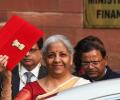
'... that it once again shies away from renewing its commitment to strategic divestment,' points out A K Bhattacharya.

Schemes like the Mukhyamantri Majhi Ladki Bahin Yojana strain fiscal resources amid rising unemployment and prices of food items.

Geopolitical tensions, trade policy uncertainties, volatility in international commodity prices and financial market uncertainties pose considerable risks to India's economic growth in the coming year, the finance ministry cautioned on Wednesday. "Global trade continues to be affected by uncertainty in the policy environment... tariff-related developments in multiple countries have heightened trade-related risks, affecting investment and trade flows globally.
